THE ELECTION HASN’T HAPPENED. THE EXCUSES HAVE ALREADY BEGUN.

When a president fears the verdict of the voters, the machinery of government should never become his insurance policy.
PRAGMATIC ISSUES | SPECIAL REPORT | OCTOBER 30, 2026
Four days.
That is all that remains before Americans head to the polls for the November 3 midterm elections.
Four days before millions of Americans exercise one of the most fundamental rights afforded to them under the Constitution.
And yet, before the ballots have been counted, before the results have been certified, before the American people have even finished speaking, Washington is already preparing for a fight over what their voices will mean.
The accusations are circulating. The warnings are escalating. The lawyers are preparing.
And the president of the United States has once again attached a condition to accepting the results of an American election.
Apparently, democracy is acceptable only when the outcome meets certain expectations.
The election hasn’t happened. But the excuses have already begun.
THE PRESIDENT AND THE CONDITIONAL CONSTITUTION
When President Donald Trump was recently asked whether he would respect the results of the upcoming midterm elections, his answer was familiar.
He would, he said, if the elections were honest.
On its surface, that might sound reasonable. Every American should expect an honest election.
But there is an important difference between demanding election integrity and suggesting, without evidence, that an unfavorable result would establish dishonesty.
It is a distinction Americans have encountered before.
The 2020 election was followed by allegations of widespread fraud that failed to withstand legal scrutiny. The country subsequently witnessed an attack on the United States Capitol on January 6, 2021.
Now, nearly six years later, the language surrounding another election sounds disturbingly familiar.
An October 27 Washington Post investigation documented thousands of statements from prominent right-wing accounts and commentators questioning the legitimacy of the upcoming vote.
Meanwhile, election officials across the country are preparing for potential disputes over ballots, certification, and federal involvement.
There is nothing inherently wrong with investigating legitimate election irregularities. There is everything wrong with treating suspicion as evidence.
A president is not required to like an election result.
He is required to respect the constitutional system through which that result is determined.
And the American people should never have to wonder whether the president considers their votes legitimate only when they benefit his political interests.
WHEN ELECTION SECURITY STARTS LOOKING LIKE LAW ENFORCEMENT
Then came the Department of Justice.
In an October 28 court filing, the Justice Department confirmed that personnel from the Drug Enforcement Administration, the Bureau of Alcohol, Tobacco, Firearms and Explosives, and the Federal Bureau of Prisons would be among those serving as federal election monitors.
Yes. The DEA, ATF, and Bureau of Prisons.
At polling locations.
The department says these employees will act as civilian monitors, not armed law enforcement officers. It also says FBI and ICE personnel will not serve as election monitors.
Those distinctions are important.
But so is the question of why personnel from agencies primarily associated with criminal enforcement are being incorporated into an expanded election-monitoring operation.
Federal election monitoring is not new. Historically, Justice Department monitors have helped protect voting rights and ensure compliance with federal election laws.
The department argues that its current operation is lawful and intended to protect election security.
Civil rights organizations, including the NAACP, have raised concerns about potential voter intimidation and have challenged aspects of the program in court.
And therein lies the problem.
When an administration has repeatedly questioned the legitimacy of elections, even lawful government actions can create understandable public anxiety if their purpose, boundaries, and oversight are not transparent.
An American polling place should never feel like the entrance to a criminal investigation.
The voter standing in line is not a suspect.
The ballot is not contraband.
And exercising a constitutional right should not require citizens to wonder whether federal authorities are watching them for reasons unrelated to protecting that right.
Election security must protect the voter, not frighten the voter.
THE VOTERS ARE ASKING QUESTIONS. WASHINGTON IS TELLING JOKES.
Perhaps nothing illustrates the disconnect between Washington and ordinary Americans quite like what happened Thursday evening at Vice President JD Vance’s Fox News town hall in Texas.
A young woman asked a remarkably reasonable question.
Her generation is repeatedly encouraged to marry young, have children, and build families.
But how, she wanted to know, are young Americans supposed to accomplish those things when housing prices and the cost of raising children have become so difficult to manage?
She referenced an average home price exceeding $415,000.
This was not some radical protester confronting the administration.
She was a young conservative asking a vice president about the economic realities confronting her generation.
And Vance initially responded by making a joke about Senator Jon Husted’s backside.
A joke.
About another politician’s anatomy.
While a young American was asking how she could afford a future.
To be fair, Vance eventually addressed the affordability question. He acknowledged that Republicans had not paid sufficient attention to young people’s financial struggles, discussed housing costs, and argued that government policy should make family life more affordable.
But then came his personal advice.
Don’t wait for the perfect time to marry and have children.
He explained that he wished he and his wife had started their family earlier.
There is nothing inherently objectionable about that personal sentiment.
But personal encouragement is not an economic policy.
You cannot pay a mortgage with optimism.
You cannot cover childcare expenses with a lecture about the joys of parenthood.
And you certainly cannot tell an entire generation that it should build families while brushing aside the very financial obstacles preventing it from doing so.
The question was not whether children bring happiness.
The question was whether young Americans can afford to raise them.
Those are two very different conversations.
And this exchange raises a larger question about the people occupying the highest offices in the country.
Are they actually listening to Americans, or are they simply waiting for their turn to speak?
THE ECONOMY DOESN’T CARE ABOUT YOUR CAMPAIGN SLOGAN
Across America, families are confronting decisions that political speeches cannot make for them.
Housing. Groceries. Insurance. Healthcare. Transportation. Childcare.
For many households, these are not abstract economic indicators.
They are calculations made at kitchen tables.
Can we afford another child?
Can we replace the car?
Can we pay the rent and still buy groceries?
Can we afford to get sick?
And perhaps the most troubling question of all:
If we work full-time, why does financial stability still feel so far away?
The administration points to its economic policies, tax measures, and efforts to strengthen American employment as evidence that it is addressing these pressures.
Critics point to continuing affordability problems, the costs associated with the Iran war, and the gap between political promises and household finances.
Those competing claims deserve examination.
But economic arguments cannot be settled by slogans alone.
They must ultimately be measured against what Americans can actually afford.
A politician can insist the economy is improving.
A family staring at an unaffordable grocery bill may have a very different perspective.
And that perspective deserves something more substantial than another campaign speech.
BARACK OBAMA, THE CHEESECAKE FACTORY, AND THE ART OF MISSING THE POINT
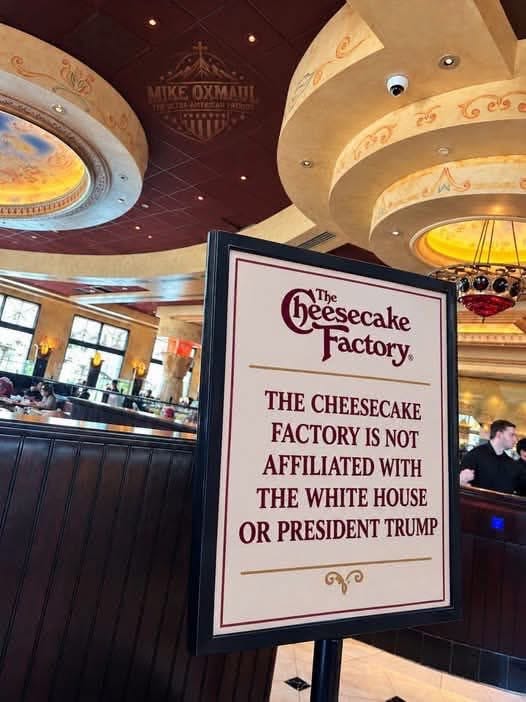
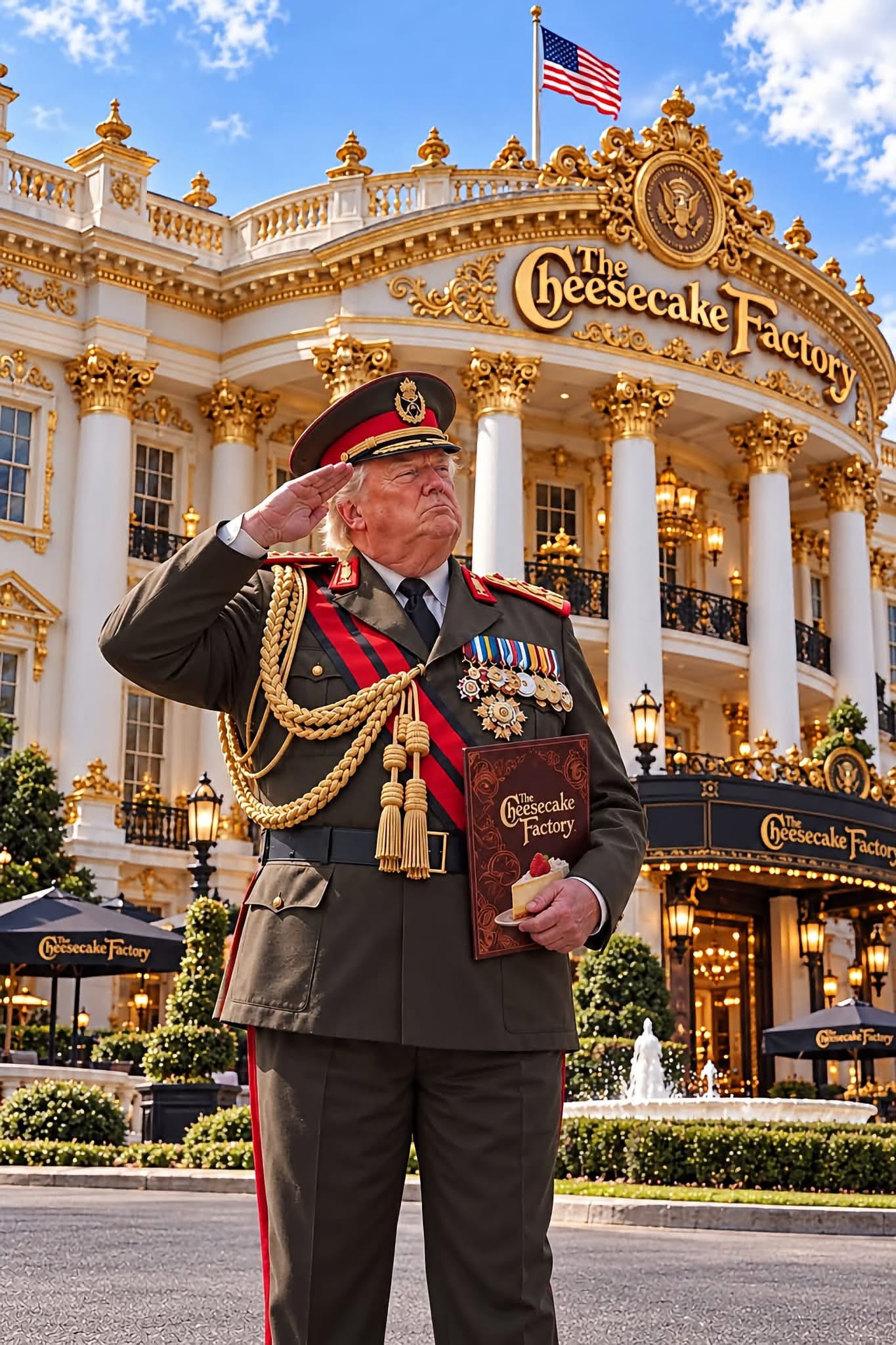
Then there is Barack Obama.
At a recent campaign appearance in Ohio, the former president joked that the White House’s gold-heavy renovations made it look as though Saddam Hussein had opened a Cheesecake Factory.
It was a pointed joke about the appearance of the people’s house.
Trump responded by defending the renovations and the restaurant, turning the exchange into yet another political dispute.
But the more important point was the one Obama returned to: the economic concerns of ordinary Americans.
There is something revealing about political leaders finding time to argue over restaurant jokes and White House decorations while voters are demanding answers about the cost of living.
The White House is not a private palace.
It belongs to the American people.
And the presidency is not an interior-design competition.
Whether one appreciates Obama’s humor or finds it inappropriate, the larger issue remains the same.
A president’s priorities are demonstrated not merely by what he says matters, but by what consistently receives his attention.
If the country is struggling with affordability, public officials should be prepared to discuss affordability.
Not just the chandeliers.
Not just the gold.
Not just who insulted whom.
The American people have more important things to worry about.
THE POLITICAL CLASS HAS A PROBLEM THAT GOES BEYOND ONE PARTY
Here is where the conversation becomes uncomfortable for Washington as a whole.
The growing distrust between Americans and their elected representatives did not begin with Donald Trump.
Nor will it automatically disappear when he eventually leaves office.
For decades, politicians from both parties have promised to restore prosperity, strengthen communities, protect working families, and make government more accountable.
Yet many Americans continue to question whether their elected officials understand the lives they lead.
They see enormous sums raised for political campaigns.
They see political careers that stretch across decades.
They see investigations, scandals, partisan theater, and endless fundraising appeals.
And they wonder who, exactly, is benefiting from the system.
This is not an argument that every politician is corrupt.
It is an argument that public trust must be earned through conduct, transparency, and results.
The young woman who questioned Vance was not asking for a political revolution.
She was asking how she could afford a home and family.
That should concern every elected official in Washington, regardless of party affiliation.
Because when citizens begin to believe that their government is more interested in preserving political careers than solving public problems, disengagement becomes an understandable response.
And when voters stop believing their voices matter, democracy itself suffers.
THE ELECTION IS NOT A PERSONAL PERFORMANCE REVIEW
The November 3 election will determine control of congressional seats and other public offices.
It will not determine the personal worth of Donald Trump, JD Vance, Barack Obama, or any other political figure.
That is not what elections are for.
Elections are how citizens exercise authority over the government that represents them.
Some voters will support Republicans.
Others will support Democrats.
Still others will reject both parties, vote for independent candidates, or make different choices across their ballots.
Those decisions belong to the voters.
Not the president.
Not the Justice Department.
Not political commentators.
Not wealthy donors.
And not the armies of online personalities attempting to convince Americans that only certain outcomes can be trusted.
There are legitimate ways to challenge election procedures and results. Courts exist for that purpose. Evidence can be presented. Laws can be enforced.
But allegations must be substantiated.
Political disappointment is not evidence of fraud.
And government authority must never become a substitute for electoral consent.
FOUR DAYS UNTIL THE VERDICT
An October ABC News/Washington Post/Ipsos poll found that approximately seven in ten Americans lacked confidence that Trump would accept the midterm results if Republicans lost.
That finding is striking.
Not because it establishes what the president will do.
It does not.
But because it reveals the depth of public concern about what might happen after the votes are counted.
Americans should be able to disagree fiercely about policy while maintaining confidence in the fundamental rules of democracy.
They should be able to criticize presidents without being treated as enemies.
They should be able to question government decisions without being accused of disloyalty.
And they should be able to cast a ballot without wondering whether the government will respect the result.
Four days remain.
Four days before Americans deliver their decisions.
The administration has an opportunity to demonstrate that election security and constitutional restraint can coexist.
Political leaders in both parties have an opportunity to demonstrate that they respect voters even when voters disagree with them.
And the country has an opportunity to remember something that seems to get lost amid the rallies, accusations, and political theater.
The government belongs to the people.
Not the other way around.
Perhaps the greatest threat to a politician’s career isn’t a stolen election.
Perhaps it’s an electorate that has finally decided it has had enough.
And perhaps the question Washington should be asking isn’t how to survive the verdict of the voters.
Perhaps it should be asking why so many voters have lost faith in the people asking for their trust.
Pragmatic Issues — Independent commentary on politics, public accountability, and the decisions that shape American life.